

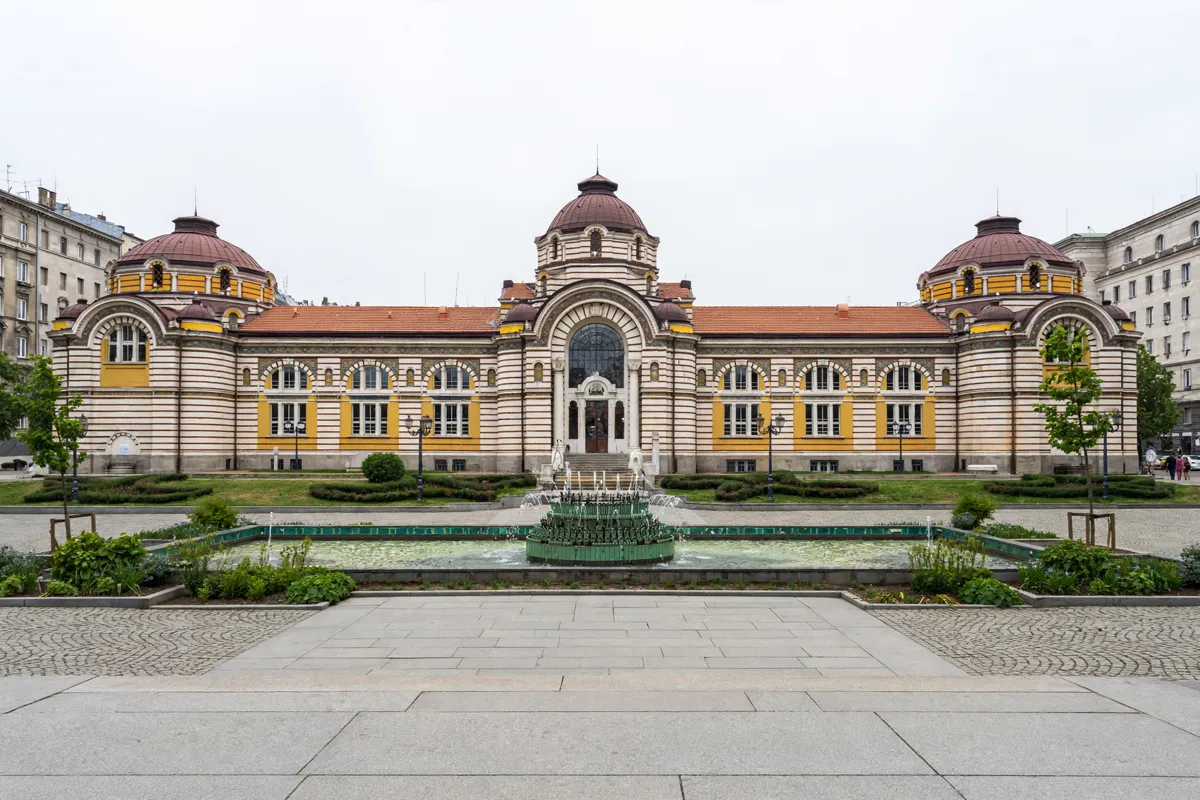
The Sofia History Museum, officially the Regional History Museum – Sofia, is in central Sofia inside the former Central Mineral Baths building. Its permanent exhibition covers the city’s history from the Neolithic to the 1940s, making it a focused stop for understanding how Sofia developed.
- Location: 1 Banski Square, in the former Central Mineral Baths building.
- Permanent exhibition: Eight halls spanning Sofia’s history from the Neolithic to the 1940s.
- Regular hours: Open daily
- Access: The main museum has a ramp, an elevator and several rooms adapted for visitors with physical disabilities.
Finding the Sofia History Museum
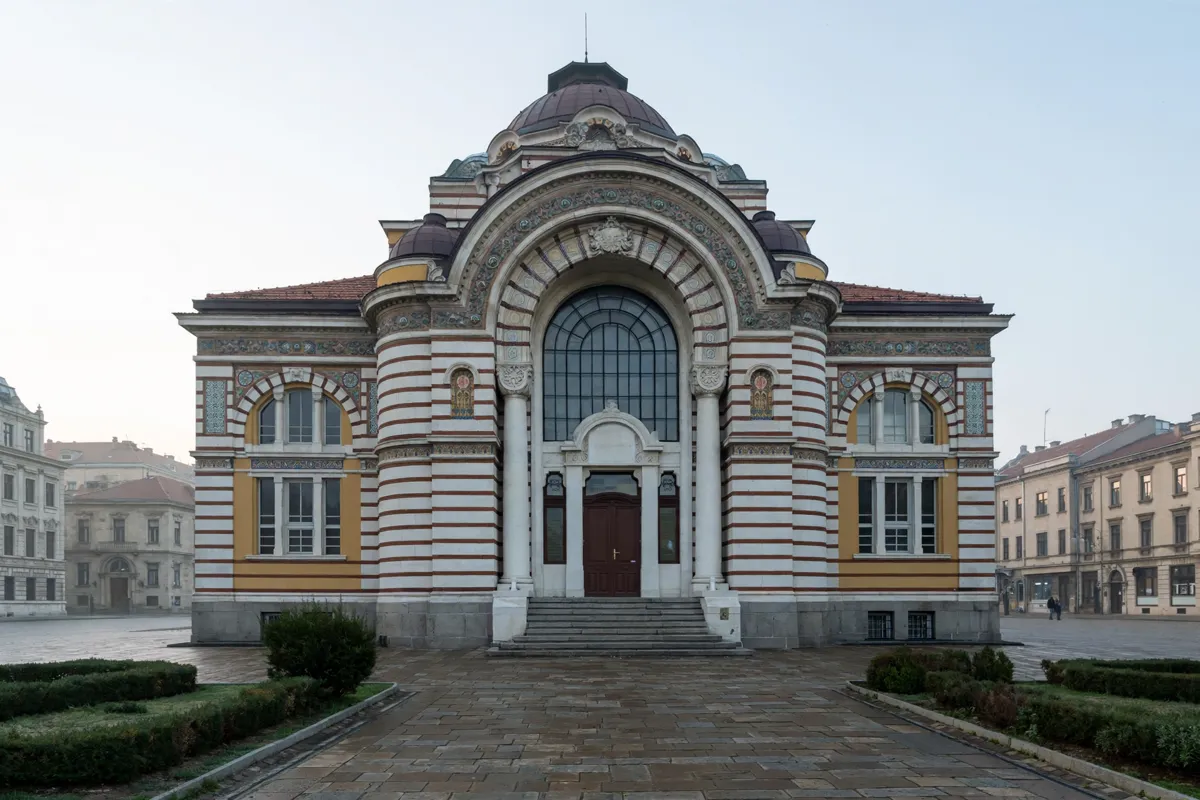
The Sofia History Museum is at 1 Banski Square, in the former Central Mineral Baths building. The building’s historic setting is part of the visit: the museum’s current permanent exhibition opened there on 17 September 2015.
The museum has a longer history than its present home. A municipal decision to establish it was made in 1928, on the proposal of Sofia mayor Vladimir Vazov, and its first permanent exhibition opened in 1941.
The museum’s coordinates are 42.700541, 23.322684. It also has branch sites around the city, including the Serdica Ancient Cultural and Communicative Complex, the archaeological level beneath St.
Sofia Basilica, the Western Gate of Serdica, the Tomb of Alexander I Battenberg and the Triangular Tower of Serdica. These are separate sites, so distinguish them from the main museum when planning your visit.
What the collections cover
The permanent exhibition follows Sofia’s story across eight halls, with a total exhibition area of 2,300 square metres. Its themes range from ancient heritage and religious life to the city’s institutions, homes and cultural scene.
The exhibition includes sections titled Heritage from Antiquity, Power of the Spirit, The Dynastic Connection to Western Europe and The Palace Study. Other themes include A Street in Sofia, State and Municipal Institutions, Homes and Clothing of citizens of Sofia, and Cultural Life and Entertainment.
Among the exhibition highlights are a Neolithic home, the wedding carriage of King Ferdinand and Tsar Ivan Shishman’s Vitosha gold-sealed deed, dated 1378. Together, the objects and themed rooms connect everyday life with Sofia’s political and cultural history.
Opening hours, tickets and visit planning
Last admission is at 5:30 p.m. Hours and ticket arrangements can change, so check the official site before you go. Plan to arrive before the final admission time so you have time to see the exhibition.
Opening hours
- Monday to Sunday: 9:30–18:00
Last checked November 2026. Hours can change on holidays and for special events.
At the main museum, a ramp and elevator support access, and several rooms are adapted for visitors with physical disabilities. Limited free visitor parking is available, with access to the parking area from Triaditsa Street. If you plan to drive or need particular access arrangements, check the museum’s official information before setting out.
The permanent exhibition is arranged across eight halls, so allow time to move through its distinct themes rather than treating it as a single display. The museum also lists a Bulgarian- or English-language audio guide; check current availability and ticket details with the museum before you go.
Pairing the museum with nearby sights
The museum’s central setting makes it possible to combine the exhibition with other historic places in the city centre. The Serdica Ancient Cultural and Communicative Complex is one of the museum’s branch sites; beneath Maria Luisa Boulevard, it includes Roman streets, cult and residential buildings, water and sewer systems, courtyards and an archaeological exhibition. You can pair the main museum with this archaeological site for two different perspectives on Sofia’s past.
The Sofia History Museum is about a 10-minute walk from Kniaz Boris Hotel, or about 0.5 km from Kniaz Boris Hotel.
Banya Bashi Mosque is another point of interest in the historic centre. You can plan it as a separate stop on the same central-area outing.
For details about the mosque’s location and history, this guide to visiting Banya Bashi Mosque in Sofia describes what to expect. You can plan the museum and mosque as separate stops in the same central-area outing.
FAQs
What is the Sofia History Museum’s official name?
Its official name is the Regional History Museum – Sofia. It is also known as the Sofia History Museum.
What period does the permanent exhibition cover?
It follows Sofia’s history from the Neolithic to the 1940s, with themes spanning ancient heritage, city institutions and everyday life.
Is the Serdica archaeological complex part of the museum?
It is one of the museum’s branch sites. Its underground complex beneath Maria Luisa Boulevard includes Roman streets and an archaeological exhibition.